Empathy is oxygen for the soul (see Chapter 6: Evidence-based empathy training). So, if you are short of breath due to life stress, get the expanded empathy delivered in this book. Just as the body needs oxygen to live physically, the soul needs empathy to live emotionally.
At first, empathy and rhetoric seem to be at cross purposes – yet the speaker without empathy is not likely to be effective or persuasive, no matter how much we may disagree
Whatever the Founding Fathers intended with the Second Amendment, they did NOT intend: Sandy Hook. They did not intend Uvale, Columbine, Buffalo, NY, Tops Friendly. They did not intend wiping out a 4th grade class using automatic weapon(s).
De Botton is absolutely on point in asserting that neither sex nor love should require us to lie in order to get them. Definitely tell the truth – including to yourself. Yet the way sex and love (affection) fall apart is concerning. How does when bring them together? See http://www.EmpathyLessons.com
Left standing when the music stops: The shortage of available talk therapists and what to do about it: Read complete post: http://www.Louagosta.com [lower right, below the vidoes]
In time of war, the power of empathy consists in putting yourself in the shoes of the enemy, thinking like the enemy, and thereby anticipating and thwarting the enemy’s moves.
As Tolstoy famously noted, all happy families are alike. What Tolstoy did not note was that many happy families are also unhappy ones. Figure that one out! Sherry’s answer to Tolstoy is her memoir about the successes and breakdowns of empathy in her family of origin and her subsequent life.
A significant aspect of the interest in relating empathy and the reading of fiction is to make the world a better place. Read some quality fiction; expand one’s empathy; and take action to improve the world. Wouldn’t it be nice?
Empathy is one of those things that are hard to delegate. This role shows up like another job responsibility with which the CEO of the organization is tasked—along with everything else that she already has to do. As if she did not already have enough alligators snapping at various parts of her anatomy, one has to be nice about it, too? But of course empathy is not niceness, though it is not about being un-nice. It is about knowing what others are experiencing, because one has a vicarious experience and then processing that further to expand boundaries and exercise leadership.
Since the bullying is a boundary violation, the way to reestablish empathy and order (where “order” means common courtesy) is to reestablish the boundary between persons.
Empathy is never needed more than when it seems there is no time for it. Empathy is never needed more than when it seems the budget does not allow for it. Empathy is never needed more than when the cynicism and resignation about life, whether in the family or the corporate jungle, are so thick you can’t catch your breath.
Kohut’s definition of empathy is a rigorous and critical one. Empathy is a mode of observation that gives one access to the thoughts and feelings of other human beings as subjects. Key term: subjectivity. Empathy is the foundation of intersubjectivity and that intersubjectivity has a temporal horizon extending from the past into the future.
It’s gettin’ crowded under the bus. We confront the paradox of “embracing” our socially distanced neighbor. There is something about humans that makes us want to breathe on one another. Empathy? There is nothing that says an empathy trend has to be positive – but don’t try and hold your breath. Expanding neighborliness is the ultimate empathy trend.
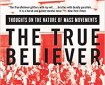
It is a high probability you are dealing with a True Believer when, in the face of a setback to the Belief System (whether religion, political party, social movement, or spiritual cause) the adherent to the cause Doubles Down. Key term: double down.
Arnold I. Goldberg, MD (1929-2020) was an innovator in psychoanalysis and self psychology, a prolific author (really prolific!), an inspiring educator, and simply a wonderful human being.
A rumor of empathy learns about a report of an alleged example of empathy in the work, actions, or conversation of a person or organization. I then reach out to the person and talk to them in detail about the work they are doing to confirm or disconfirm the validity of the rumor.
Freud is explicit about his commitment to empathy. He writes and publishes the following: It is certainly possible to forfeit this first success [in therapy] if one takes up any standpoint other than one of empathy such as moralizing (“Further… Read More ›
Empathy: A Lazy Person’s Guide is a light-hearted look at a significant and engaging matter: how to expand empathy in the individual and the community – and do so without working too hard. The Guide includes twenty eight illustrations by… Read More ›
If ever there was a time for online (tele/cyber) talk therapy, this is it. In case you were trekking through Tibet or living in a cave with Buddhist monks, allow me to clarify why. Key term: social distancing. It is… Read More ›
10. Empathy is the new love. You know how in fashion gray is the new black? Same idea. Empathy is the new love. What people really want is to be “gotten” for who they authentically are as a possibility. In… Read More ›
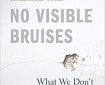
The title of Rachel Louise Snyder’s eye-opening, powerful, page-turner of a book, No Visible Bruises, refers to strangulation [No Visible Bruises: What We Don’t Know About Domestic Violence Can Kill Us, New York: Bloomsbury Publishing, 2019: 309 pp, $28(US)]. Some… Read More ›
The reader in Chicago may say that’s fine, but what has it got to do with the situation here in the USA? We do not have child soldiers or wide spread traumatized populations. Think again. Gangs are recruiting children of tender age not only as messengers but also as triggermen, because they know youngsters will face a different criminal justice system and process, generally more lenient, than adults.
The first empathy book reviewed here is very good indeed. William Miller’s Listening Well: The Art of Empathic Understanding (Wipf and Stock, 114pp, ($18US)) is a short book. Admirably concise. My short review is that, as I am author of… Read More ›
You don’t need a philosopher to tell you what empathy is; you need a philosopher to help you distinguish the hype and the over-intellectualization from a rigorous and critical empathy. Every parent, teacher, health care worker, business person with customers,… Read More ›
In the webcast the participants will engage how to:
• Distinguish empathy from compassion, forgiveness, pity, and “niceness”;
• Establish and maintain boundaries with bullies, slackers, difficult individuals, and friends while still honoring one’s commitment to empathy, to client service, to flourishing financially, to inclusiveness and community;
• Identify failures (breakdowns) in empathy and what to do about it; and
• Expand or contract empathy on demand by overcoming obstacles to empathy.
This book contains some thirty (30) empathy lessons for life. A key empathy lesson that explicitly addresses empathy training: remove the resistance to empathy—obstacles such as cynicism, shame, guilt, aggression, narcissism, devaluing language, and so on—and empathy spontaneously shows up, comes… Read More ›
Here are twelve (12) top radio shows on empathy. Lou Agosta interviews thought leaders in the community about work they are doing that expands empathy. Note: interviews are edited to delete the commercials. Biographical information about the speaker and interviewer… Read More ›
The neurochemical reshaping of personality has had many unanticipated consequences. I acknowledge that the debate is not ended by the Chapter in my A Rumor of Empathy on “Plato Not Prozac,” the name of which is hereby acknowledged to be from… Read More ›
If the survivor can feel safe enough to express what happened into an empathic receptivity in the context of a trusting environment that does not retraumatize by skepticism and cross-examination, then the abuse, the boundary violations, and the perpetrations, begin… Read More ›
Join me [Lou] for an on the air conversation on Empathy Radio focusing on top tips and techniques for expanding ones empathy. Click here to play the show: 10 Top Tips and Techniques for Expanding Empathy. The main tip and… Read More ›
Join Lou Agosta and his special guests Drs. Jesse Viner and Dale Monroe-Cook for an engaging conversation about the emotional, psychological, and human challenges of emerging adulthood. Drs. Viner and Monroe-Cook address these issues with their clients as Medical director and… Read More ›
Three women a day die as the result of domestic violence [DV] (nnedv.org). Join me for an “on the air” conversation with Radhika Sharma, education coordinator at Apha Ghar (Our Home, ApnaGhar.org) on the VoiceAmerica Empowerment Internet radio channel (click… Read More ›
Join me for a conversation on Radio Empathy (click here for podcast on Spotify) with Alice Dreger about the conflict between scientific evidence and some interpretations of social justice and “empathy” (in quotation marks). Dreger starts out as a graduate student exploring… Read More ›
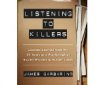
Join me for an “on the air” interview with Jim on the VoiceAmerica Empowerment Internet Radio network [click to listen]: A Rumor of Empathy in Listening to Killers – with replay available shortly after April 22nd. James Garbarino presents lessons… Read More ›
Join me for an engaging, live “on the air conversation” with David Howe, author of Empathy: What it is and why it matters. David Howe begins with the idea that empathy humanizes people and their relationships. Empathy is about our shared… Read More ›
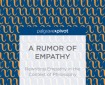
Here is the short version of the short version: The deep, underground history of empathy is surfaced and reconstructed in Hume, Kant, Lipps, Freud, Scheler, Stein, and Husserl. A rumor of empathy is engaged in vicarious feeling, receptivity, empathic understanding, empathic interpretation, and… Read More ›
I have been talking with people in the community about what is “psychoanalysis.” The result? Many people no longer understand what is psychoanalysis – if they ever did understand it – or, even worse, have confused ideas about it. For… Read More ›
Here is a sixteen minute educational video produced and edited by yours truly featuring Serena Low, Executive Director of Apna Ghar (“Our Home”) which operates a shelter and crisis hot line for women in Chicago. She nets out a forty… Read More ›
This educational video includes a presentation by Lou Agosta on Heidegger’s call for a special hermeneutic of empathy in Heidegger’s book Being and Time. The different aspects of such a Heideggerian inquiry into and definition of empathy are spelled out… Read More ›
“Mud and Squalor” is the nickname of the US Army Air Corps base out of which in 1943 David James and his mentor, Carroll Langston, flew P-51 single engine, pursuit aircraft during World War II. Mr. James talks about his… Read More ›
This is an on camera interview with Serena Low, Executive Director, Apna Ghar (“Our Home”), captured on December 13, 2012. Apna Ghar (“Our Home”) operates a Hot Line and Shelter for women who are dealing with domestic abuse, intimate partner… Read More ›
In BEING AND TIME, Heidegger famously notes that the analysis of the affects (pathe) has taken barely one step forward since book II of Aristotle’s RHETORIC (H139). This Hot Link is an essay on this subject published in Philosophy Today… Read More ›
I am humbled by the comments of my colleagues, friends, and associates. “An insightful and provocative exploration of a topic that has only recently begun to receive the attention it deserves and the conceptual clarity needed for a proper understanding…. Read More ›
Empathy training is all about practicing balance: You have to strive in a process of trial and error and try again to find the right balance. So “lazy person’s guide” is really trying to say “laid back person’s guide.” The “laziness” is not lack of energy, but well-regulated, focused energy, applied in balanced doses. The risk is that some people – and you know who you are – will actually get stressed out trying to be lazy. Cut that out! Just let it be! Drive out hostility and aggression, and empathy naturally and spontaneously comes forth!
Empathy works. Empathy makes a profound and lasting difference. But in the age of TikTok does it work fast enough? Empathy and its many successes are themselves the occasions for the skepticism, resistance, and seeming embrace of the obstacles to empathy. A rigorous and critical empathy can be hard work; better to take the easy way out. The reader may say, I want instant empathy, like instant coffee, just add hot water and stir. Wouldn’t it be nice?
Invoking desire is like throwing a libido bomb – the result is going to be an explosion of emotional anarchy. No one escapes the chaos. In so far as one has to tear down the old temple (or government) before raising up the new one, desire will do the job nicely. Totalitarian rule is the systematic canceling and nullification of empathy, indeed of the possibility of empathy.
This article on Paul Ricoeur, empathy, and the hermeneutics of suspicion in literature will be engaging to students of Ricoeur and empathy alike. One can download the PDF : http://ricoeur.pitt.edu/ojs/ricoeur/article/view/628
Until Bigger Thomas (BT) committed the first murder, he was little different than the biblical Cain before he slew Abel. Human history begins at the point at which that murder, born of envy, occurs. The murder creates agency. Likewise with BT:
Review: Mutilated empathy in spite of itself in Migrant Aesthetics: Contemporary Fiction, Global Migration, and the Limits of Empathy by Glenda Carpio (New York: Columbia University Press, 2023, 285pp.) [This review updated to correct typos and grammatical infelicities on Dec 10, 2023.]… Read More ›
So far, the two-ton elephant in the room is “Maybe men and women really do have different brains – or a combination of brains and early experiences that produce different results from the same input.” Note this applies either in… Read More ›









































 Empathy Lessons